
Quick Answer
Waiting too long for a wisdom tooth extraction raises your risk of painful infections, damage to neighboring molars, and impaction-related nerve compression. Most oral surgeons recommend removing problematic wisdom teeth in your late teens or early twenties, when roots are shorter and healing is faster. Once infection or crowding sets in, the surgery becomes more complex and recovery longer.
Most people know their wisdom teeth are coming. The ache in the back of the jaw, the pressure that builds when biting down, the occasional flare-up that disappears for a few weeks then returns worse. And most people put off doing anything about it.
That cycle of avoidance is not unusual. Oral surgery feels drastic, the timing never feels right, and the discomfort often fades enough to justify waiting. The problem is that wisdom teeth rarely get better on their own. They get quieter for a while, and then they get much worse.
Understanding what actually happens during delayed treatment starts with knowing what a wisdom tooth extraction involves and why the timing of it matters as much as the decision to go ahead.
Why Wisdom Teeth Become Problems in the First Place
Wisdom teeth are third molars, the last set of permanent teeth to erupt. For most people, they arrive between the ages of 17 and 25. The human jaw has changed considerably over thousands of years of dietary evolution, and most modern mouths simply do not have enough room to accommodate them comfortably.
Impaction: The Root of Most Complications
When a wisdom tooth cannot fully erupt through the gumline, it is classified as impacted. Partial impaction means the tooth has broken through the gum partially. Full impaction means it remains entirely beneath the bone. The American Association of Oral and Maxillofacial Surgeons estimates that roughly 90% of people have at least one impacted wisdom tooth.
Impacted teeth do not erupt and then stop being a problem. They continue to develop pressure against adjacent structures, often shifting the second molar and disrupting years of orthodontic work. The tissue around a partially erupted tooth creates a natural pocket where bacteria accumulate, and that pocket is nearly impossible to clean properly with a toothbrush.
Pericoronitis: The Infection Most Patients Do Not See Coming
Pericoronitis is an infection of the soft tissue surrounding a partially erupted wisdom tooth. It causes swelling, jaw stiffness, difficulty swallowing, and in serious cases, spread of infection toward the throat and neck. The condition is directly tied to that bacterial pocket around the partially exposed crown.
Here is the thing most patients miss: pericoronitis can resolve with antibiotics, which makes it easy to believe the problem is gone. It almost always comes back. Antibiotics manage the infection; they do not remove the structural cause of it. Each recurrence tends to be harder to manage than the last.
What Specifically Goes Wrong the Longer You Wait
Timing is not a minor variable in wisdom tooth surgery. The difficulty of extraction, the risk profile, and the recovery timeline all shift meaningfully depending on how developed the tooth is and what has happened to surrounding tissue.
Root Curvature and Bone Fusion
Younger patients, typically those between 16 and 24, tend to have shorter, less curved roots that have not yet fused fully with the surrounding bone. Removal is usually straightforward. By the mid-twenties, roots have often developed full curvature and the tooth sits more firmly anchored. Extraction may require sectioning the tooth, meaning cutting it into pieces before removal, which extends the procedure and recovery.
Nerve Proximity and Permanent Numbness Risk
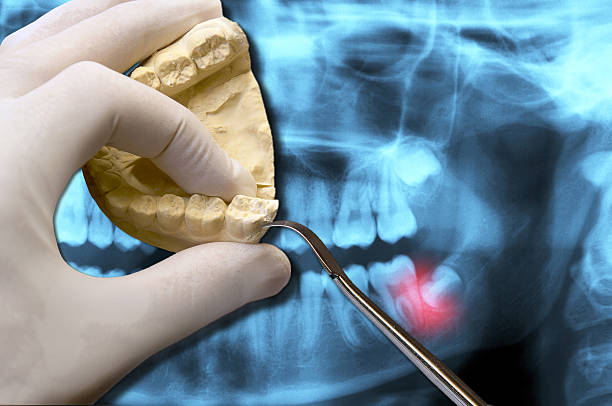
The inferior alveolar nerve runs through the lower jaw and sits close to the roots of lower wisdom teeth. As roots grow longer over time, the gap between the root tip and the nerve narrows. The risk of temporary or permanent numbness in the lip, chin, and lower teeth increases with delayed surgery. Panoramic X-rays and cone beam CT scans are standard tools oral surgeons use to map that proximity before proceeding, but the anatomy does not get safer with time.
Cyst Formation and Bone Loss
A dentigerous cyst is a fluid-filled sac that can develop around the crown of an impacted tooth. Left undiscovered, these cysts expand slowly, destroying surrounding bone. They are usually identified on routine X-ray. Most patients had no symptoms before diagnosis. By the time a cyst is found after years of avoidance, the bone loss it caused may require a separate grafting procedure to address.
When Waiting Actually Makes Sense
Not every wisdom tooth needs to come out. A fully erupted, properly positioned wisdom tooth with no decay, no adjacent pressure, and no gum disease may be monitored conservatively. The key is that monitoring must be active, not passive. Annual panoramic radiographs and regular periodontal assessments are the standard of care for patients choosing observation over surgery.
That said, most oral surgeons with clinical experience will tell you that truly asymptomatic, problem-free wisdom teeth are rarer than patients expect. And the conversation about whether to wait shifts significantly once someone has had even one episode of pericoronitis or cyst formation.
What the Extraction Process Actually Looks Like
Patients who delay wisdom tooth removal often do so partly because they have built up a mental image of the procedure that is more dramatic than the reality. Understanding the actual steps tends to reduce anxiety considerably.
Most extractions begin with local anesthesia. Many patients choose intravenous sedation or general anesthesia, particularly for multiple extractions or significant impaction. The surgeon makes a small incision in the gum tissue if needed, removes any bone covering the tooth, and extracts the tooth in one piece or in sections depending on root shape. The site is cleaned, and dissolvable sutures close the tissue.
And this is where it gets interesting: recovery for most patients who have the procedure done in their late teens or early twenties is typically four to five days of restricted activity. Patients who wait until their thirties frequently report longer healing curves, more pronounced swelling, and higher rates of dry socket, a painful condition where the blood clot that protects the extraction site dislodges prematurely.
Frequently Asked Questions
What is a wisdom tooth extraction?
A wisdom tooth extraction is a surgical procedure to remove one or more third molars, the last set of permanent teeth located at the back corners of the mouth. It is one of the most common oral surgery procedures performed in the United States.
How do I know if my wisdom tooth is impacted?
Common signs include pain or pressure at the back of the jaw, difficulty opening the mouth fully, swelling or redness of the gum tissue behind the last molar, and bad breath or an unpleasant taste that does not resolve with brushing. Definitive diagnosis requires a dental X-ray, typically a panoramic radiograph.
What is the difference between simple and surgical tooth extraction?
A simple extraction is performed on a fully visible tooth using dental forceps. Surgical extraction, which applies to most impacted wisdom teeth, involves making an incision in the gum tissue and possibly removing bone to access the tooth. Oral surgeons perform the surgical type, which may include IV sedation.
Who needs wisdom tooth removal?
Patients with impacted wisdom teeth, recurrent pericoronitis, adjacent molar decay caused by impaction crowding, cyst formation, or insufficient jaw space are standard candidates. Patients who are completely asymptomatic with well-positioned third molars may be monitored rather than treated surgically.
How do I choose an oral surgeon for wisdom tooth extraction?
Look for a board-certified oral and maxillofacial surgeon, the surgical specialty with the most intensive training in dentoalveolar procedures. Confirm that the practice uses cone beam CT imaging for surgical planning and offers IV sedation options. Green Bay, Wisconsin residents in northeastern Wisconsin have access to this level of specialized care locally.
